By Dr. Saijyot Raut, Consultant Spine Surgeon at One Spine
21/11/2025 | 8 Min read
Many people join the gym with the intention of getting stronger, improving posture or staying active and healthy. But some exercises when performed with poor technique or excessive weight, can overload the spinal discs. This is one of the key reasons behind the rising number of slipped disc cases among regular gym goers.
A slipped disc occurs when the soft inner portion of a spinal disc pushes outward through its tougher outer layer. This irritation can affect nearby nerves and lead to symptoms such as lower back pain, neck pain, sciatica, tingling, numbness or muscle weakness.
If your symptoms are severe, you should refer to our complete slipped disc treatment guide to understand all medical and non-surgical options
Below are the exercises most commonly linked to slipped disc injuries and why they cause problems.
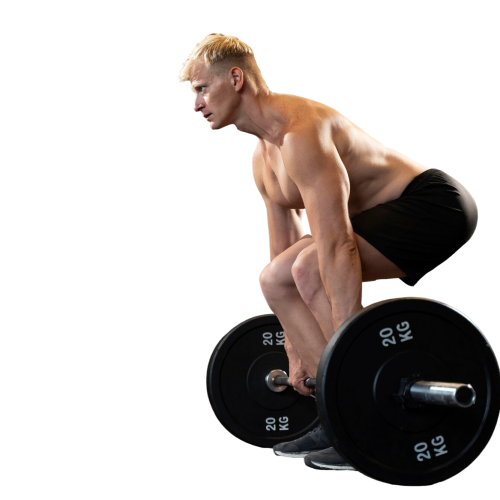
Deadlifts are one of the best strength training exercises but they are also one of the most misperformed. When you deadlift with a rounded back, the natural curve of the lumbar spine collapses. Instead of the hips and legs absorbing most of the force as they are designed to, the pressure shifts directly to the lumbar discs, particularly the L4-L5 and L5-S1 levels. These discs already carry the highest load in everyday activities, so adding heavy weight on top of poor form significantly increases the risk of disc herniation.
A slipped disc often occurs when:
How to Deadlift Safely and Protect the Spine:
Mastering these basics dramatically reduces the chance of a slipped disc while allowing you to benefit from one of the most effective strength-building exercises.
Squats are one of the most effective exercises for building strength in the legs, hips and glutes. But when performed incorrectly especially with heavy weights they can place excessive stress on the spine. The most common issue is not using your core muscles enough, which can hurt your lower back.
Your core is not just your abs, it includes deep stabilizing muscles such as the transverse abdominis, pelvic floor, diaphragm and spinal erector muscles. These muscles form a natural brace that supports the spine during loaded movements. When they fail to activate properly, the lumbar spine absorbs more force than it can safely handle. This is where the risk of a slipped disc increases.
Common squat mistakes leading to disc issues include:
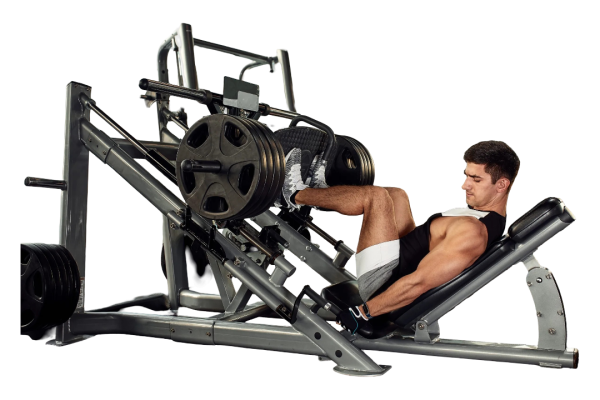
The leg press is often viewed as a safe alternative to squats because it follows a fixed path and offers back support. This machine is responsible for many lower back disc injuries, especially when performed with excessively deep knee flexion.
When you bring your knees too close to your chest during a leg press, the pelvis naturally tilts backward. This rounding of the lower back forces the lumbar spine out of its neutral position. Instead of the hips and legs absorbing the pressure, the load shifts directly onto the lumbar discs, particularly around L4-L5 and L5-S1. These common Leg Press Mistakes That Contribute to Slipped Disc Injuries
A slipped disc during leg press becomes more likely when:
Improperly performed sit-ups and crunches are one of the most common gym mistakes that increase the risk of a slipped disc. When these exercises are done with a rounded lower back, jerky movements or excessive neck pulling, they place direct compressive and shear forces on the lumbar discs. This pressure can push the disc outward, especially at the L4-L5 and L5-S1 levels where most herniations occur.
Why This Movement Increases Slipped Disc Risk:
Overhead presses are excellent for building shoulder strength, but performing them with poor spinal alignment significantly increases the risk of a slipped disc. When the lower back arches excessively or the ribcage flares during the lift, it places intense compressive force on the lumbar discs, especially at the L4-L5 and L5-S1 levels.
Kettlebell swings are meant to be a hip hinge power movement, not a lower-back exercise. When people swing the kettlebell by pulling with the back instead of generating force from the hips, the lumbar discs absorb repetitive stress. Over time, this faulty technique can significantly increase the risk of a slipped disc especially in beginners who lack hip mobility or core stability.
A slipped disc rarely appears out of nowhere. Early symptoms often include:
If any of these symptoms persist for more than a few days, it’s important to get evaluated by a spine specialist.
You don’t need to avoid these exercises altogether, just perform them safely.
A straight, stable spine distributes load evenly across the discs.
Exercises like planks, dead bugs, and bird-dogs stabilize the spine and reduce injury risk.
Mastering form before progressing in weight is one of the most effective ways to prevent disc Warm muscles and joints help absorb load more efficiently.
Sudden weight jumps are a major cause of gym related disc herniation.
If you’ve been experiencing persistent back or neck pain after workouts or if symptoms spread to your arms or legs it’s best to seek medical advice early. Disc herniation responds best to timely care and early treatment helps avoid long term nerve irritation.
Gym training is one of the best ways to stay fit, but it requires awareness of your spine’s limits. Most slipped disc injuries come from poor technique, heavy lifting without control, and inadequate core stability not from the exercises themselves.
By understanding which movements carry higher risk and how to perform them safely, you can protect your spine while still progressing in your fitness journey.
Verified by:

M.S ( Ortho), F MISS, F CV
Dr.Saijyot Raut is a consultant spine surgeon with 10+ years of expertise in minimally invasive spine surgery, scoliosis and complex spinal disorders. He is part of One Spine team which has branches all over Mumbai and practises across leading hospitals in Mumbai
Yes, improper form, heavy lifting, and weak core engagement during exercises like deadlifts, squats, or leg press can overload the spine and cause disc herniation.
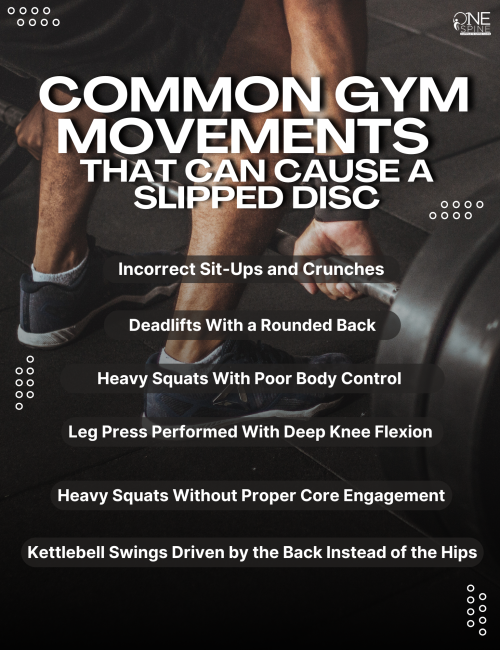
Deadlifts with a rounded back, heavy squats, deep flexion leg press, incorrect sit ups, overhead presses with poor alignment and improper kettlebell swings.
Sharp back or neck pain, radiating pain in the legs or arms, tingling, numbness, muscle weakness, and pain that worsens after workouts or long sitting.
Maintain a neutral spine, strengthen your core, learn correct lifting technique, warm up properly, increase weight gradually, and avoid lifting while fatigued.
If pain persists for more than a few days or radiates to your arms or legs, consult a spine specialist in Mumbai to prevent long-term nerve damage.